
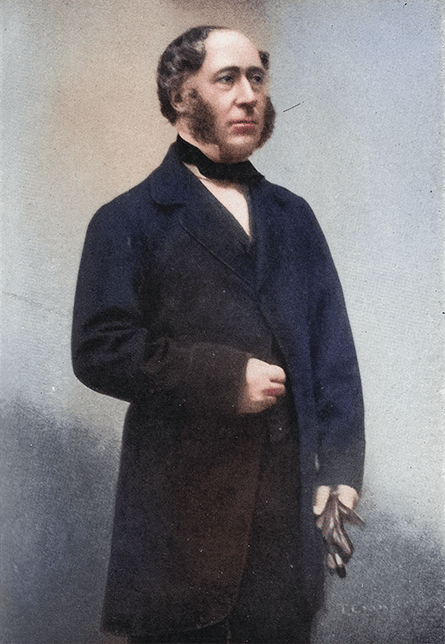
George Henry Moore (1810-1870), man of the world, landlord, sportsman and politician was educated at Oscott College (1820-27) and Christ’s College, Cambridge (1827-1828), which he left without a degree.
For the next fifteen years he devoted his keen intellect to horse racing and foreign travel; he also developed considerable ability as a painter.
In 1846, during the Irish famine, he bid for one of Mayo’s two seats in Parliament, left vacant by his future wife’s brother, and was elected the following year on a pledge to advance and protect Catholic and tenants’ rights in Ireland. In 1851, when he vas 42, he married his 23 year old neighbor Mary Blake; their eldest son George Augustus Moore (the future novelist) was born the following year.
In 1857 George Henry Moore withdrew from politics after a crushing defeat at the polls. During the next ten years he surrendered to his passion for horse racing, to the practical detriment of his affairs. “It is painful to think,” he wrote in on 16 April 1870 to his wife (his last letter), “that I should have bartered away the peaceful happiness of [Moore Hall] for horses and other foolish hopes, — terminating in miserable disappointment” (NLI, MS 895, ff.832).
He was High Sheriff of Mayo (1867) and in 1868 was again elected to Parliament on a radical Irish platform. For a time he vied for leadership of Irish nationalist politicians but in April 1870, while attempting to quell a rent strike on his property, he died of brain hemorrhage — “heartbreak” his physician said privately, in view of the manner in which his striking tenants had treated their champion. The entailed estate passed to his 18 year old eldest son who lived with the rest of the family in London.

Leave a comment