- Iconography
- Fair use
- Aesthetics
- Bibliography
- Worlds
- Participatory Publishing
- Pedagogical Dilemma
- Resubscribe
Iconography
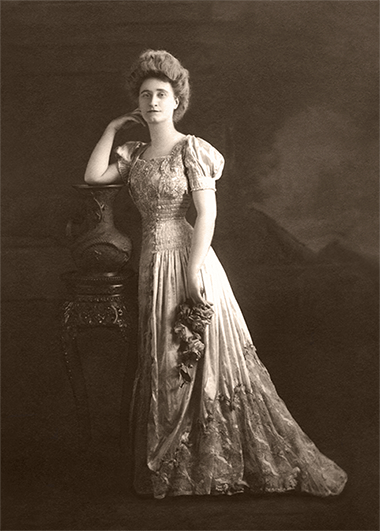
In the past month I have added a gallery of Girlfriends to the Iconography of George Moore. These 22 women were his pals, not necessarily his partners; and they seem too few for a guy who claimed he “had thousands of women.”
I’m not sure why George purportedly said that; probably to create a reality distortion field. To judge from his memoirs and biography, he was not horny; he was no Casanova or Marquis de Sade, and Don Juan wasn’t his alter ego.
I think he said it because he wanted to seem familiar and engaged with many women, though not to marry or have children with one.
The Girlfriends gallery may still be incomplete. I am relying on others to identify women I have overlooked. But even as it is now, the gallery indicates that George was enchanted by creativity and spunk rather than curves when he made friends with the opposite sex; he was normally courteous, discreet, empathetic, evidently something of a feminist, and he wasn’t a philanderer.
Another gallery named Cronies is coming soon to the Iconography. Probably men only in that case, and not too many either, because George didn’t seem to encourage male bonding beyond what I would call “work friendships.”
Fair use
Each page of the Iconography of George Moore displays one or more images that I mostly found on the Internet. Most are vintage pictures in the public domain, but that hasn’t prevented some owners of the physical media from claiming copyright.
Not being a lawyer, I wasn’t sure what to make of their claims. Imagine if I likewise claimed copyright in the oil portrait of George Moore by Henry Harris Brown that I own? I would not do that because I have no such right; nor do other owners like me, in my opinion.
That said, the copyright question may be moot within a legal framework of “fair use.” You can read about that in Wikipedia as I did. In order to do the right thing under fair use, I have linked every picture to its owner when I know it; and published only low-resolution reference images that can’t be reused for commercial purposes.
History says the doctrine of “fair use” originated in common law during the 18th and 19th centuries as a way of preventing copyright law from being too rigidly applied and “stifling the very creativity which [copyright] law is designed to foster.” Fostering creativity is important to me, but my primary MO is to find and freely share new knowledge.
Aesthetics
Also in the past month I have acquired 66 additional scans of essays for the Aesthetics pillar of George Moore Interactive. I got them from the British Newspaper Archive, Newspapers.com, and HathiTrust.
Many of the scans are of inferior quality, with muddy and faded text because the pages are lifted from old microfilms. Yes, I can read them on my screen, but no, I can’t run them through a gamut of optical character recognition (OCR) to make them machine readable.

I know of two ways to overcome muddy text in order to kickstart literary legacies in the digital age. One is labor intensive: manually transcribe each publication. The other is efficient: run big batches of crappy text through AWS Textract in order to distill machine-readable text.
The efficient way isn’t free of manual housekeeping chores. But one way or another, these 66 essays will soon show up in the Aesthetics pillar as hitherto uncollected art and literary criticism of George Moore.
In addition to the aforesaid 66, I recently identified 79 articles in 19 vintage periodicals that need to be scanned for the first time ever; 33 of these articles are in the Hawk newspaper, edited by George’s brother Augustus.
No microfilms have paved my way here, so I will have to order new digital scans from institutionally archived hardcopy. This is slow, expensive, a damned nuisance, but probably the only way to finish the Aesthetic pillar with every known article ever written by George Moore.
The only way unless you come to the rescue! In case I have overlooked the existence of previously photographed or scanned periodicals that you have seen, here’s a list of what I need. If I listed anything you recognize, please leave a comment.
Thankfully I have located hardcopy of these 19 periodicals, so come hell or high water I will rope them in. There are four more periodicals that I haven’t located because my friend Edwin Gilcher, Moore’s bibliographer, didn’t say enough about them to tell me where to look.
I am listing them below in case you can tell me what and where they are.
- Burlington (1881)
- Evening Post (1920)
- Phoenix (1899)
- Time (1887)
You can read more details about these four outliers in the Periodical Publications section of the Bibliography.
Bibliography
If you’re very familiar with A Bibliography of George Moore you’ll recall that letters to the editor are included in Periodical Publications. I have excluded letters to the editor from the Aesthetics pillar of this project, feeling that a better place for them is the Letters pillar.
For that reason, you can find hundreds of essays of art and literary criticism in Aesthetics, but no letters to the editor. Such letters are listed in Periodical Publications of the Bibliography but not yet available for your reading pleasure.
Time now to tip my hat to a colleague who has proofread the Bibliography and confirmed a reasonable degree of fidelity to the printed original. She prefers not to be named at present, but her contributions to the mission have been huge.
With proofreading in the rear view mirror, she has turned our attention to collecting new entries for the Bibliography; by new we mean entries that postdate Edwin’s Supplement in 1988.
Are you the editor of an edition of George Moore’s writing that is not in the bibliography? Can you identify particulars of any such editions? If you meet either of these criteria, please email your suggestions to have them included.
Worlds
The Worlds pillar currently has two titles of creative writing: Martin Luther (1879) and A Mummer’s Wife (1885). I created three prototypes of each, not being sure which would best serve their users.
Recently I learned that dynamically embedded Google Docs on GMi are searchable using the Find command of any desktop browser. That was a eureka moment because of my false belief that dynamically embedded Google Docs are not searchable in the WordPress environment. But they are!!
Now that I know better, I have removed one of the prototypes of each title and kept the other two. Prototypes of dynamically embedded Google Docs (in a white box, as shown above) remain; their text can be keyword searched using the Find command in a browser.
By the way, if a user wants to keyword search the entire canon rather than a particular part of it, I have published instructions for how to do that as well.
I should explain that “dynamically embedded” means that text in the white box is filled with a Google Doc in the cloud. That text is easily updated, so readers can be sure that the text on their screen is the latest and greatest.
People who don’t want to keyword search text but simply read an ebook can get one in the Kindle Store. The texts of my Google Docs are identical to the Kindle editions I published; and both are faithful to printed first editions.
Next up in the Worlds pillar is Avowals (1919).
Participatory Publishing
George Moore Interactive is a paragon of “participatory publishing.” That means: I do what I can to make good content accessible and useful to people like you, and I rely on people like you to fill the blanks and connect the dots.
That’s why at the bottom of every GMi page you’ll find an invitation to “Leave a comment.” Not a smile sheet. Heaven forbid! I don’t need to be told what I’ve done well, but rather what I should do better! When you notice opportunities to improve a page, please “leave a comment” at the foot of that page and be specific.
If your feedback is not about a page, but an aspect of the project as a whole, you should surrender to your participatory urge on the Contact page. Write your suggestion, or at least identify an opportunity to do better, and I shall do my best.
Pedagogical Dilemma
Here is an interesting quote from “Llamas, Pizzas, Mandolins,” by Paul Taylor reviewing The Worlds I See: Curiosity, Exploration and Discovery at the Dawn of AI, by Fei-Fei Li :
Li’s conviction that universities are the best place to make a difference in AI is rather wonderful. I only wish I had a clearer idea about how we should be educating the young people who come to us, now that so many of the skills we teach are susceptible to automation.
London Review of Books, Vol. 46 No. 6 · 21 March 2024
Now that so many skills being taught are susceptible to automation, what are your ideas about how to educate young people? Mine are implied in the title of this post, which you may recognize from an old song:
If you wanna keep something precious
Gotta lock it up and throw away the key
You want to hold on to your possession
Don't even think about me
If you love somebody
If you love someone
If you love somebody
If you love someone, set them free
(Sting)
Folks who enjoy George Moore’s literary legacy probably love him. Love is a strange word to use for our feelings, but I think it fits.
And if you accept my premise, that people like ourselves love George, then also accept Sting’s advice and set him free. Empower him and his readers to meet each other on their own terms, for their own reasons, and then let them go. Magic awaits!
Resubscribe
There are currently two domains of George Moore Interactive:
- georgemooreinteractive.blog where I publish newsy posts
- georgemooreinteractive.org where I publish the seven pillars
Sometime after this post goes live, I plan to export all my posts to the .org site where they will join the seven pillars.
If you already subscribe to this blog and wish to continue receiving email notifications, please resubscribe to .org on the home page. That way you’ll continue to be notified when new posts go live.