
Hi Reader! The foundries of George Moore Interactive are called pillars. Each uniquely supports my overarching aim of kick-starting a literary legacy in the digital age.
I’m making six of the pillars from the facts of Moore’s life and work. Each of the pillars represents phenomena manifest in history. They summon tangible things that are neither theorized nor fantasized nor intuited, and they go on to make such things useful and expedient to readers today.
The factual pillars include:
1. Bibliography (his publications)
2. Aesthetics (his criticism)
3. Iconography (imagery of him)
4. Chronology (events he experienced)
5. Letters (his communications)
6. Collections (artifacts and souvenirs)
I straightforwardly named these pillars a while back; then struggled to identify the missing seventh. There must be a seventh pillar, I reasoned, because seven is a mystical number (seriously); moreover one of my favorite books is Seven Pillars of Wisdom (1926) by T.E. Lawrence (a modernist peer of George Moore) and I liked the echo; also because an important class of data was missing from the array, though I couldn’t name it.
Until I did:
7. Worlds (make-believe)
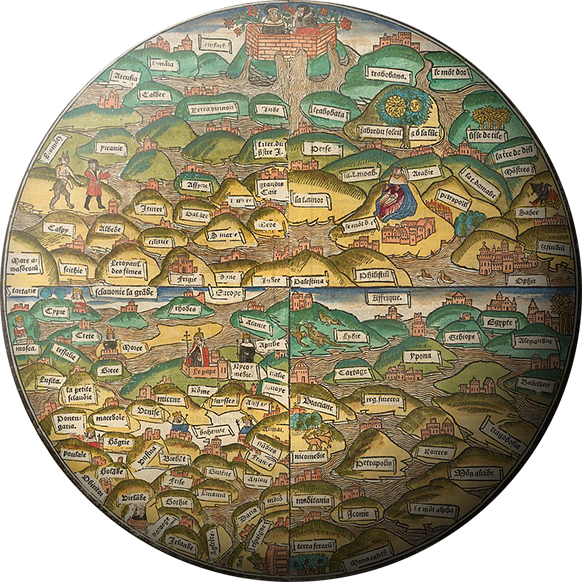
The Worlds pillar is not made out of objective facts like the others. It represents the creative content of George Moore’s worldbuilding as a novelist, poet, dramatist, essayist and memoirist. The figments of his imagination that he recorded on paper and that didn’t exist before he thought of them, and still persist only in the Anglo-Irish cultural ether.
Worldbuilding is usually associated with genres of science fiction and fantasy, neither of which George Moore wrote or wrote about. He was a materialist, also known as a realist, sometimes caricatured as a sensualist, with strong affinities for social science.
That said, he was an artist and not a scientist (though as a disciple of Émile Zola he appreciated the scientific method). Like the impressionist painters he fraternized with and promoted, he carefully observed conditions in which people lived, their appearance, behavior and organization, and he made from these observations an art that seemed grounded. But it was not grounded. It was a long and meandering serial flight of fancy.
Worldbuilding by George Moore didn’t involve bending or breaking laws of nature. His realistic fiction was never surreal. Nor was it journalistic. While he copied aspects of nature and society in order to flesh out his storytelling, readers didn’t — and shouldn’t — visit his canon to learn what life was really like between 1852 and 1933. Instead they can explore George Moore’s sometimes peculiar point of view and the “impressions” he turned into exquisite art.
One of my favorite examples of his worldbuilding is the story of Albert Nobbs, which first appeared in A Story-Teller’s Holiday (1918). Moore “copied” this story from nature and society, in a newspaper article he must have read, about an actual transgender man. From this elemental, tabloid raw material, he wove a tender love story that has no precedent in English fiction, as far as I know, and which at the same time feels like it has always been and belonged there, just waiting to be acknowledged. Like so much about gender and sexuality in the real world.
Albert Nobbs was eventually dramatized for the stage in France and England (where I saw it) and the United States, but never in Ireland as far as I know. Glenn Close made it into an Oscar-nominated feature film.
What Moore did with some person who modeled Albert Nobbs in a Victorian newspaper is the same that he did with Phidias, Héloïse d’Argenteuil, Pierre Abélard, Martin Luther, Jesus Christ, Joseph of Arimathea, Edouard Manet, William Butler Yeats, Lady Gregory, Arnold Dolmetsch, Nellie Melba, and uncounted others including himself.
In Confessions of a Young Man (1888), he performed the astonishing transmutation of himself as a living human being into a work of art, his own spontaneous performance as Pygmalion in reverse.
The Worlds pillar of George Moore Interactive represents many of these creative expressions, all of them showing how an artist of genius builds beautiful new worlds from the raw materials of lived experience.
Thank You
My lecture Kick-Starting Literary Legacies in the Digital Age was given at the Oak Park Public Library on 25 February 2023. The text of the lecture and a video recording are posted here.
Thank you for attending in-person or online! The QA afterwards was terrific! We had rare fun talking about literature, fine art and advanced technology all at the same time.
My thanks also to Oak Park Library staff who created and managed the event so professionally: Kheir Fakhreldin, Kathleen Spale, Eric Alexander, Rafal Baranowicz, Jabez Patterson and J Soto. I have been on many sets before this one, but none were smoother or sweeter!
